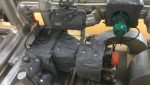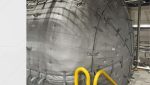


We still occasionally encounter situations where a client is not convinced that removable insulation is as effective as fixed insulation. After all, can covers made of technical fabrics really be as effective as mineral wool protected by sheet metal? The answer is yes, but more on that in a moment. Let us return to the undecided client, accustomed to conventional fixed insulation.
Free energy efficiency calculation
Following a site visit, we prepare an energy efficiency calculation. What does it include?:
- the operating temperature of the equipment and the ambient temperature,
- the estimated heat emission surface area,
- heat losses before and after insulation,
- the annual load of the installation, etc.
Based on this, and taking into account the cost of insulation, it is possible to calculate, among other things, the annual energy savings [MWh] and the payback period of the investment. For most clients, the latter parameter is crucial, namely how long it will take to recover the cost of purchasing the covers and when energy savings (annual energy gain [kWh]) will begin to be generated.
The return on investment for SUM Guard thermal insulation covers is typically just a few months on average.
The figures may look promising, but is that really the case in practice?
A client, under pressure from high utility bills (with further increases expected in the near future) and the need to optimise production costs, orders a trial set of covers. A selected technical installation is designated for insulation, and the results are then carefully monitored.
After a few weeks, additional units are ordered, until it turns out that SUM Guard covers are present in every department and production line of the facility. One is almost tempted to say: “We told you so.” And we know that as the company expands, it will commission us to insulate further industrial installations.
Returning to the question from the beginning of this post: is thermal insulation using covers as effective as traditional insulation? Yes.
Insulation performance – i.e. how effectively it limits energy flow – is determined, apart from build quality and manufacturing precision, by two key parameters: λ, the thermal conductivity coefficient, and its thickness. Both parameters directly define the resulting thermal resistance of the insulation layer.
SUM Guard covers are characterised by very high efficiency, as their thickness is always selected individually depending on the conditions at a given facility, and the insulating materials used are consistently among the highest quality available on the market.
Can SUM Guard covers serve as standalone insulation, or can they complement fixed insulation? The answer to both questions is yes.
Most importantly, the client has a choice and can select the insulation solution that best fits their specific needs.